Project Background
As a villa designer with over a decade of experience, I received a challenging project: designing a 600sqm private villa for an entrepreneur client. The client's requirements were clear—combining rich Chinese cultural heritage with modern living convenience. This "Chinese Modern" style positioning is one of the most challenging topics in high-end residential design today.
In this project, I tried integrating SweetHome's AI-assisted design tools into my workflow for the first time. This article will share my design thinking, decision-making process, and how AI tools helped me present design proposals more efficiently.
Design Philosophy: Finding Balance Between Traditional and Modern
"Chinese Modern" is not simply stacking Chinese elements with modern furniture, but finding the inner connection and balance point between the two. I established three core design principles for this project:
1. Color Unity: Deep Wood Tones as Foundation
The entire villa uses deep walnut as the primary color, complemented by vermillion red, gold accents, and cream white for balance. This color system has the stability and depth of Chinese style without appearing dated. The use of gold is particularly crucial—it embodies both Chinese "nobility" and modern luxury style.
2. Material Dialogue: Traditional Craftsmanship and Modern Technology
Traditional materials like rosewood, blue-white porcelain, and silk create a dialogue with modern materials like marble, glass, and stainless steel. The key is making them coexist harmoniously rather than conflict.
3. Function First: Modern Lifestyle
Regardless of style, a villa must first meet the needs of modern family life. Large-screen TVs, smart home systems, and modern kitchen appliances are essential. The design challenge lies in integrating these modern devices seamlessly with the Chinese environment.
Space Planning: Four-Floor Functional Zoning
The 600sqm space is distributed across one basement level plus three above-ground floors, approximately 150sqm per floor. In planning, I followed the principle of "public-private separation, dynamic-static zoning":
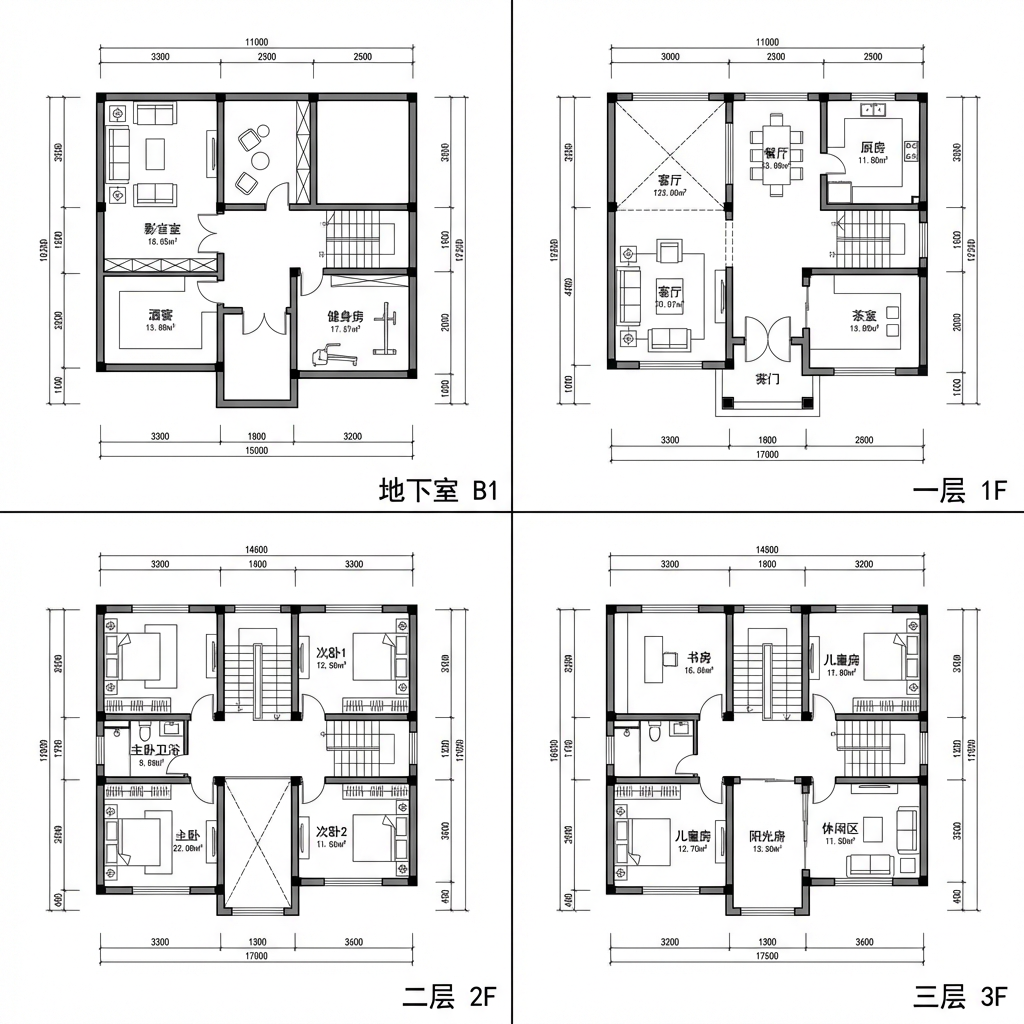
Basement (B1): Private Entertainment Space
The basement houses a home theater, wine cellar, and gym. These functions require relatively enclosed environments, and placing them underground ensures sound insulation while freeing up more natural light for above-ground spaces.
First Floor (1F): Public Reception Space
The first floor is the villa's "facade," including a double-height living room, dining room, kitchen, and tea room. The living room features a 6-meter ceiling height, serving as the core space showcasing Chinese modern style.
Second Floor (2F): Private Master Space
The second floor contains the master suite (with en-suite bathroom) and two secondary bedrooms, meeting family members' living needs.
Third Floor (3F): Extended Function Space
The third floor includes a study, children's room, sunroom, and recreation area, providing more possibilities for family life.
Design Decisions: Thinking Through Each Space
Living Room: Restrained Use of Chinese Elements
The living room is the space that best demonstrates design skill. My principle was: Chinese elements should be refined, not excessive.
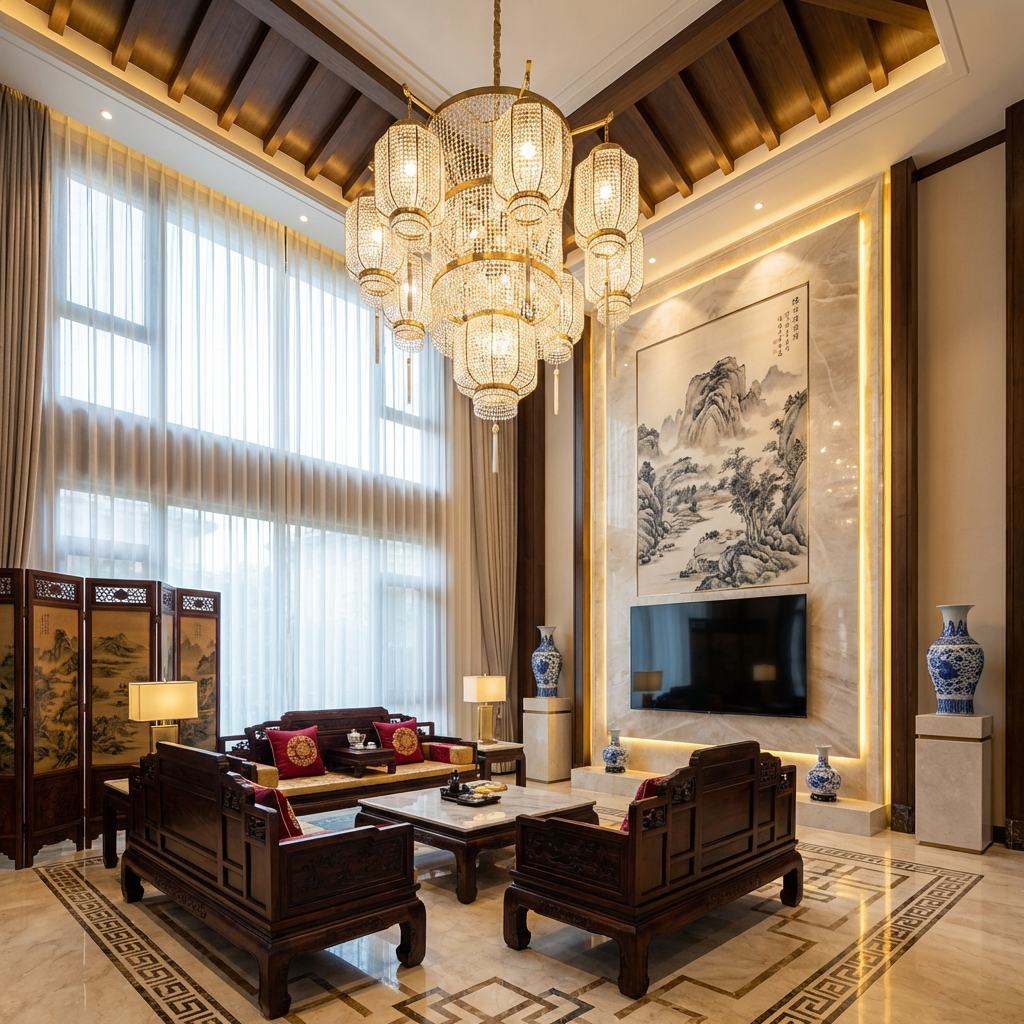
- Kept: Rosewood sofa set, landscape paintings, blue-white porcelain decorations, Chinese screens
- Removed: Traditional carved ceilings, elaborate window lattices, excessive red
- Merged: Crystal chandelier incorporating Chinese lantern design, TV wall using marble with Chinese landscape imagery
Tea Room: The Purest Chinese Expression
The tea room is the space with the most concentrated Chinese elements in the entire villa. Here I chose a purer expression.
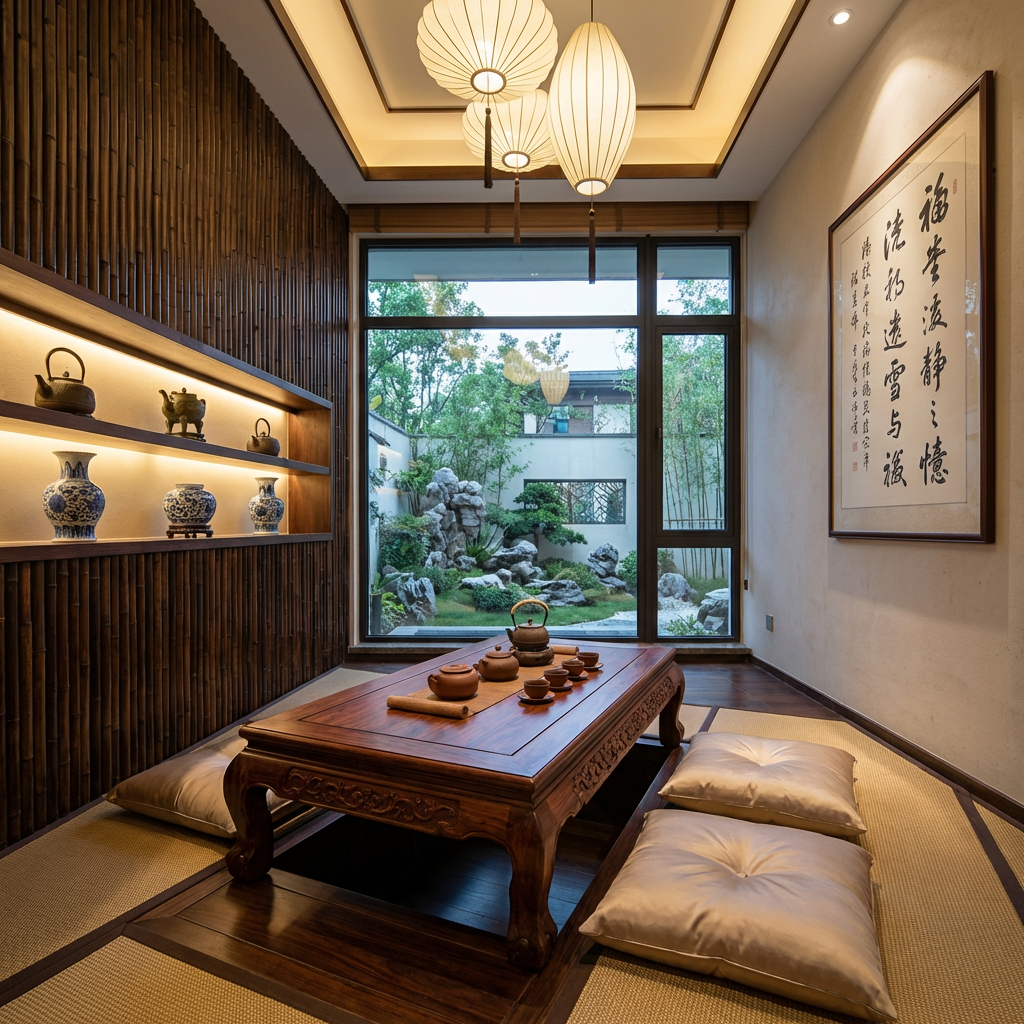
Rosewood tea table, bamboo blinds, calligraphy scrolls, tatami elements... these traditional symbols are fully displayed in the tea room. But I still maintained modern comfort: concealed air conditioning, soft LED lighting, and ergonomic cushion heights.
Home Theater: Chinese Packaging for Modern Function
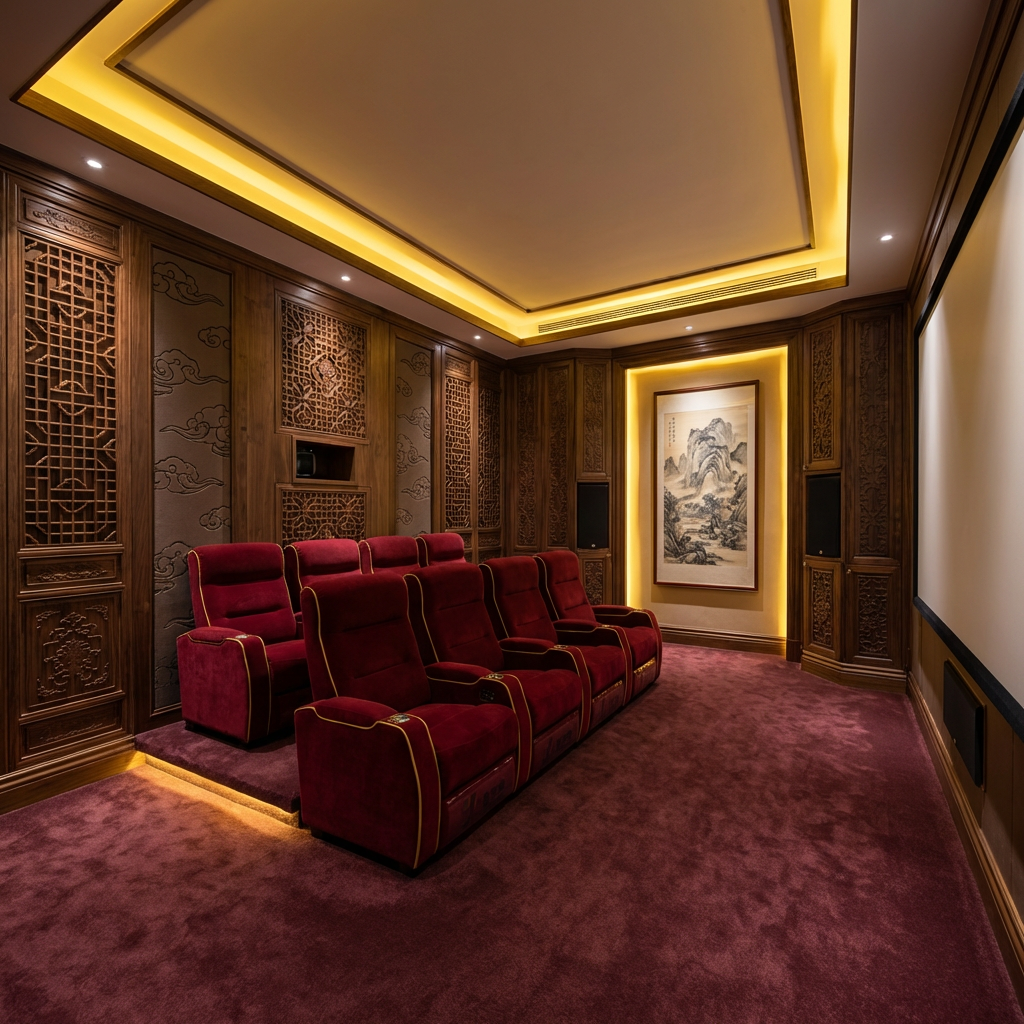
The home theater is a purely modern functional space, but I gave it Chinese character through:
- Acoustic panels featuring Chinese cloud patterns
- Deep red velvet seating echoing Chinese colors
- Landscape paintings on side walls as decoration
Master Bedroom: Balance of Comfort and Style
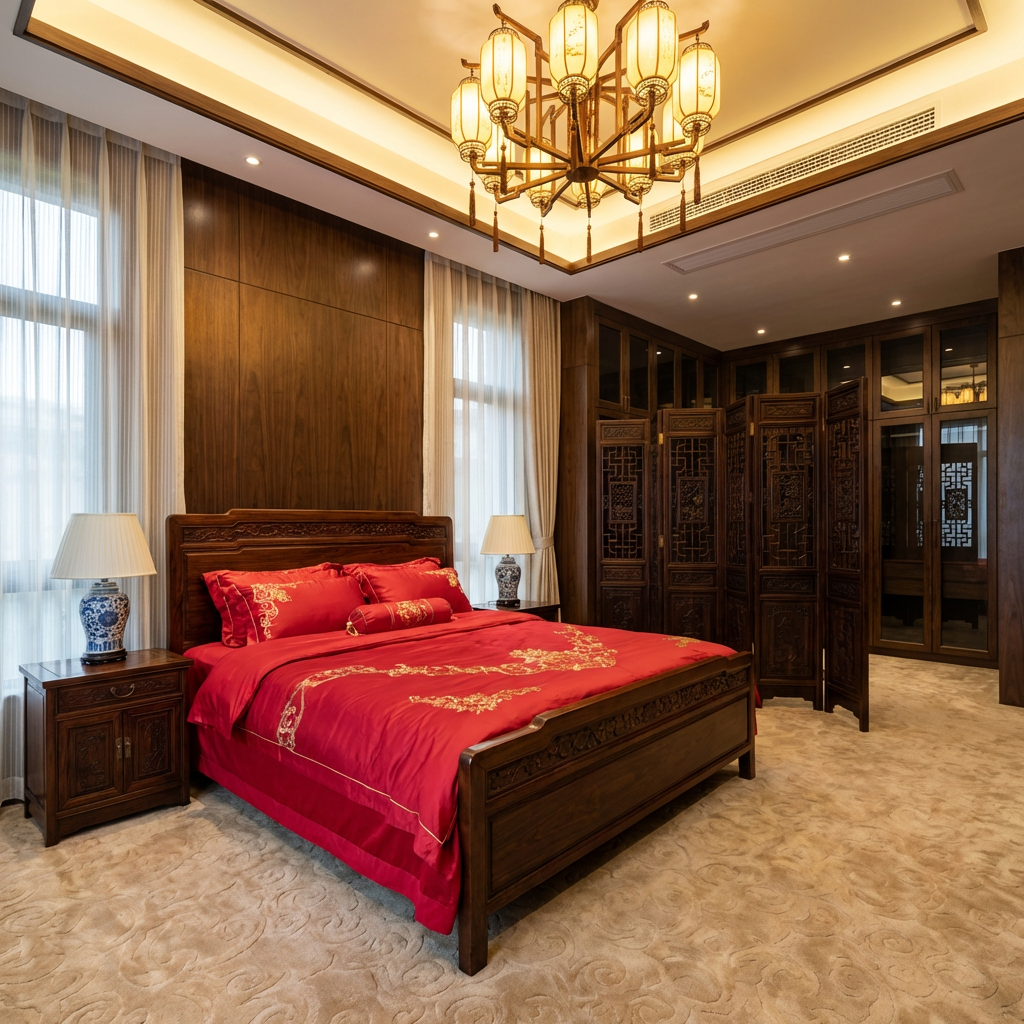
The bedroom must first ensure sleep quality, so I was even more restrained with Chinese elements. The rosewood bed frame is the finishing touch, silk bedding adds texture, but the overall color palette leans toward warmth, avoiding overly stimulating reds.
AI-Assisted Design: Using SweetHome
In this project, SweetHome helped me solve a long-standing problem for designers: how to quickly present design intent to clients.
Pain Points of Traditional Workflow
Previously, going from concept to rendering required: hand sketches → CAD plans → 3D modeling → rendering output. The entire process could take one to two weeks. Clients often only truly understand the design proposal after seeing the rendering, and if major revisions are needed at that point, the earlier work is wasted.
AI-Accelerated New Workflow
After using SweetHome, my workflow became:
- Concept Phase: Describe design intent in text, AI quickly generates concept images
- Communication Phase: Discuss concept images with clients, rapidly iterate and adjust
- Refinement Phase: After confirming direction, proceed with detailed 3D modeling
For this villa's 15 rooms, I completed all concept renderings in a single day. This was unimaginable before.
The Art of Prompts
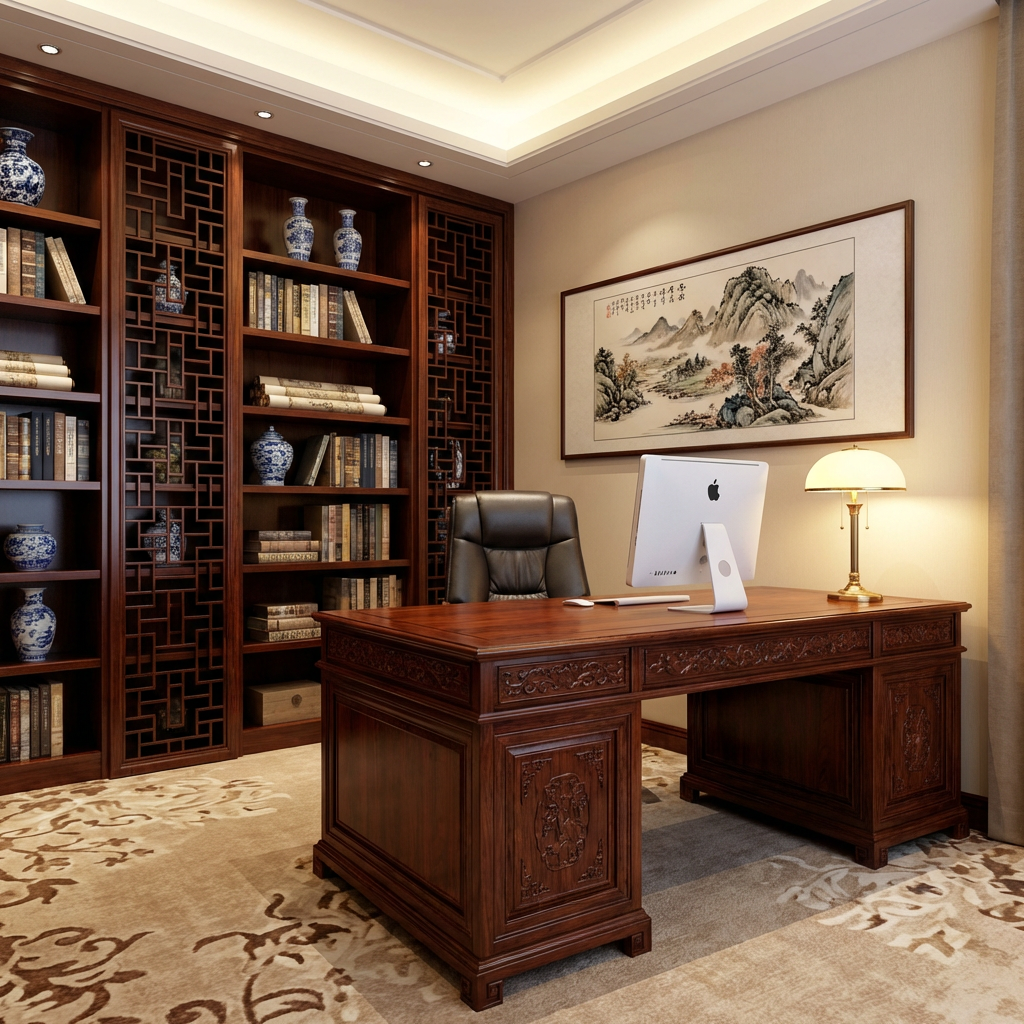
The key to using AI tools is accurately describing design intent. For the study, my prompt was:
"Luxurious Chinese modern style study room in villa, large rosewood desk with carved details, leather executive chair, floor-to-ceiling bookshelf with Chinese lattice design filled with books and antiques, traditional Chinese landscape painting on wall, blue white porcelain decorative pieces, modern computer on desk, warm ambient lighting from brass desk lamp..."
Summary and Reflections
This 600sqm Chinese modern villa project gave me a profound realization: good design is not about piling up elements, but the art of making choices.
The core challenge of Chinese modern style lies in finding the balance between traditional and modern. Too traditional appears dated, too modern loses cultural heritage. Designers need to make trade-off decisions in every space and detail.
The emergence of AI tools allows designers to validate design ideas more quickly and communicate with clients more efficiently. But AI cannot replace designers' aesthetic judgment and professional experience—it is a tool, not a designer.
I hope this article provides some reference for fellow designers, and welcome everyone to try using SweetHome to assist your design work.
Start Your Design Journey
Whether it's a complete villa project or a single room renovation, SweetHome can help you quickly visualize design proposals.
Experience AI Design Now